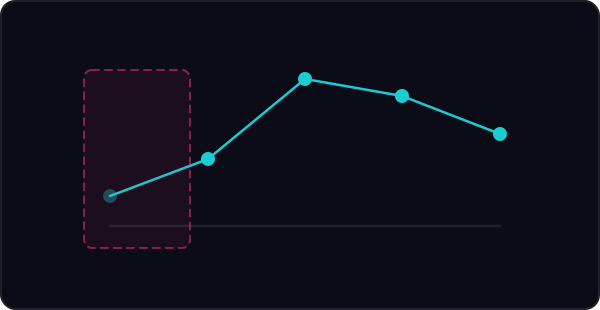
At the very start of a recording your alpha is tiny (mine opened around 3 to 4%) and then climbs fast as you settle in. On top of that, both scores need about 16 seconds just to warm up. So any average over the whole recording gets dragged down by a minute of you getting comfortable.
What a real change looks like: in one 5-minute session going from focus into calm, my alpha (the relaxation signal) climbed from about 6% up to 30% over the first three minutes, then eased back down. It peaked at minute three, not at the end, which tells me I’d relaxed well before I stopped recording.
One thing to watch, and I had this the wrong way round at first. Alpha rising on its own is relaxation. Theta climbing while alpha starts to fall is the direction of drowsiness: the transition from wake into the first stage of sleep is described as a change in wave frequency from alpha to theta (Nayak, Sankari and Anilkumar, EEG Normal Sleep, StatPearls), not as the two rising together. Alpha and theta rising together is the meditation signature instead. Twenty minutes of nondirective meditation raised both against quiet rest in the same people, with the alpha increase more pronounced in posterior regions (Lagopoulos et al. 2009), and that posterior alpha is what PO3 and PO4 sit over.
My own session fits the sleep direction rather than the meditation one. Alpha at PO4 peaked at minute three (29.7%), then eased to 26.4% and to 18.6%, while theta climbed to 21.7% by minute four. Alpha falling away as theta rose, which is the classic direction of drowsiness. Theta also rises with mental fatigue during imagery tasks (Li et al. 2024), so late-session theta is worth reading as tiredness as much as sleepiness.
Try this instead: Cut the first 60 seconds before you compare anything. And always read alpha next to theta, not on its own, or you will read the beginning of drowsiness as a good result.
Sources
My own data: three recorded console sessions (248,320 samples), including the five-minute “Focus to Calm” session analysed at PO4, and the Notion console references.
- Neurosity documentation: Focus and Calm, for the 16-second initialisation
- Nayak, C. S., Sankari, A., and Anilkumar, A. C. EEG Normal Sleep. StatPearls.
- Lagopoulos, J. et al. (2009). Increased Theta and Alpha EEG Activity During Nondirective Meditation. Journal of Alternative and Complementary Medicine 15(11):1187-1192.
- Li, T. et al. (2024). Research on mental fatigue during long-term motor imagery. Scientific Reports 14:18454.