Field guide

Findings

15 findings in one place: what cost me time and how much, the evidence behind the calm score, and a primer for anyone who has never touched an EEG headset.


First findings

Start here if you have never touched an EEG headset.


Main findings

What cost me time, sorted by how much the mistake costs you, plus the constraint analysis behind them.

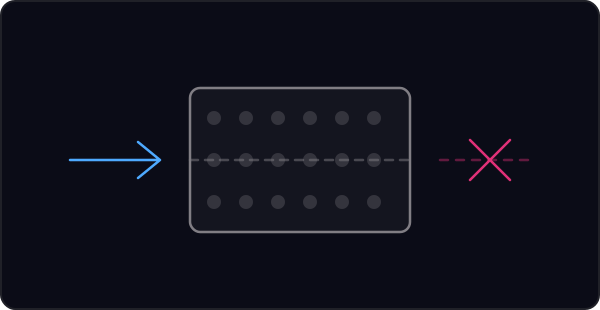
Don't open the raw export in Excel. It quietly eats your first data point.
Costs a day, silently

Don't open the raw export in Excel. It quietly eats your first data point.

The file has no header row, so line one is already real data.


01
I'd trust the calm score more than the focus score, and there's a real reason.
Changes what you build first

I'd trust the calm score more than the focus score, and there's a real reason.

Between the two scores Neurosity hands you, I'd trust calm first and treat focus as unconfirmed until you've ruled out muscle.


02
Build on alpha first: the best-evidenced signal this headset records
Build on alpha

Build on alpha first: the best-evidenced signal this headset records

The evidence under the calm score, what it lets you build, and the one-minute test that tells you your setup can see it.


01
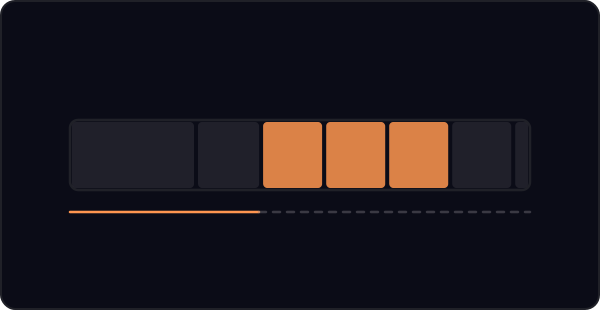
Once you train the headset, those trials are gone. You can't get them back out.
Structural, no way around it

Once you train the headset, those trials are gone. You can't get them back out.

The console shows a count and that is all: no list of trials, no score per trial, no export button, nothing.


03
A pile labelled "219 trials" was really a much smaller pile of useful ones.
Count before you trust the count

A pile labelled "219 trials" was really a much smaller pile of useful ones.

219 looks impressive until you sort by what each command actually is.


04
Training fatigue
Protocol design

Training fatigue

The biggest session I ran was 60 trials of mental math, and my own quality dropped off around trial 20. Here is what I would do differently.


05
Two commands that you can't train
Physically impossible

Two commands that you can't train

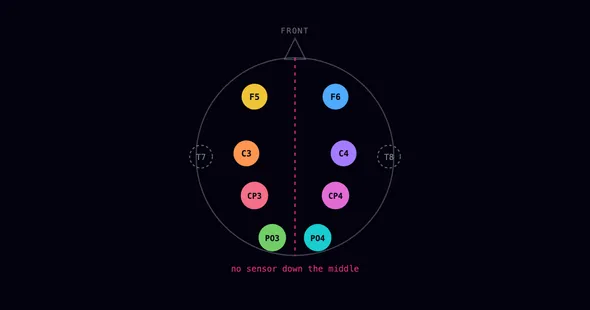
The headset has eight sensors and a gap straight down the middle of the head. Two of the commands on the menu generate their signal in places this layout cannot see.


06
A baseline protocol worth running: 30 left, 30 right
Suggested protocol

A baseline protocol worth running: 30 left, 30 right

If you are picking this work up, start with two-class hand imagery: 30 imagined left-hand pinches and 30 right, one sitting, recorded so that you keep the data.


07
Throw away the first minute of every recording
Reading a recording

Throw away the first minute of every recording

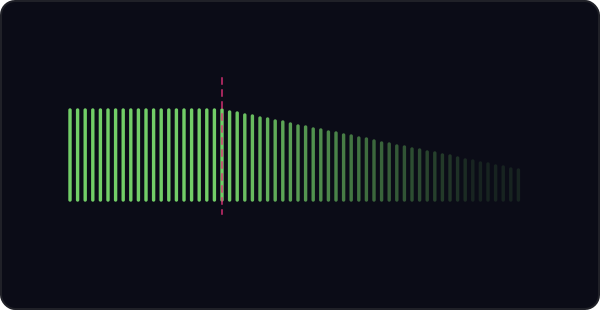
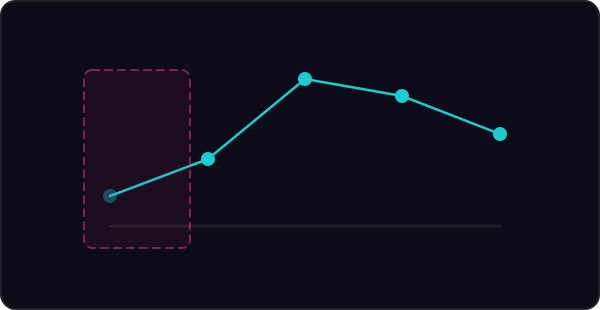
At the very start of a recording your alpha is tiny and then climbs fast as you settle in, so any whole-session average is dragged down by you getting comfortable.


08
A loud channel isn't a busy brain. It's a bad connection.
Sensor contact

A loud channel isn't a busy brain. It's a bad connection.

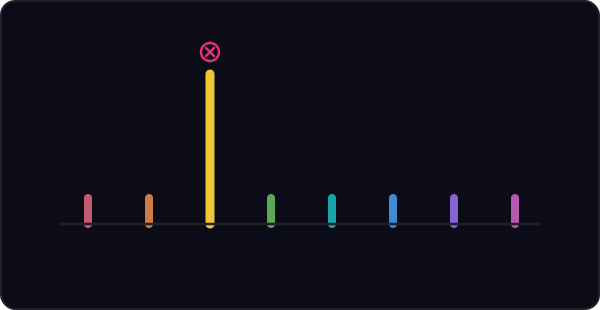
If one sensor's signal is far bigger than the others, that's a sensor that isn't sitting right.


09
Three things this headset can already do that no one has made a product around.
Nobody's built these yet

Three things this headset can already do that no one has made a product around.

Two vibration motors in the band, a smoothed data feed, and the normalisation layer nobody has built.


10
Can an 8-sensor consumer headset learn to tell one imagined movement from another?
The approach

Can an 8-sensor consumer headset learn to tell one imagined movement from another?

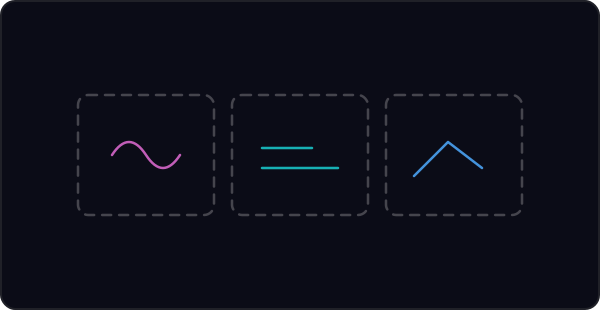
The console offers thirteen commands. I selected three, and the selection was the whole design decision: I did not pick from the menu by what sounded interesting, I started from the physiology and worked backwards.


The tools in full

The long-form write-up of what I built, kept whole rather than split across findings.

Explore more

This site covers what the documentation doesn't: the things I wish someone had handed me first.